

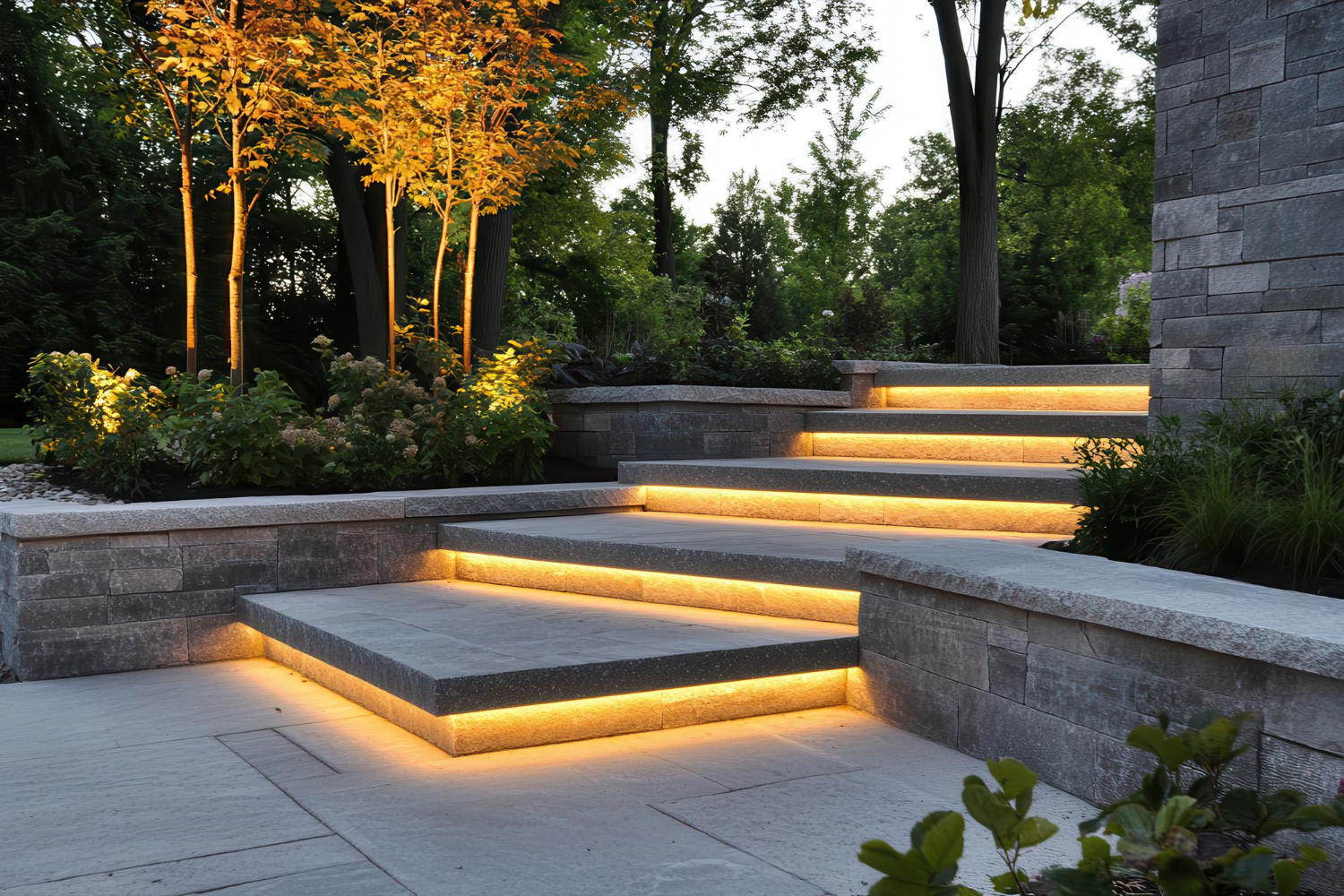
Safer Summer Nights on Every Sandy Springs Step
Outdoor stairs should feel safe under every footstep, even when the air is thick and the steps are damp. When stairs are dark, wet, and slick, they can turn from a simple path into a real hazard for family, friends, and pets.
On warm Sandy Springs evenings, people move in and out of the house nonstop. Kids run between the kitchen and the pool. Guests carry food down deck stairs to the patio. Pets race up and down to the yard. If those steps are dim, unevenly lit, or holding water, one bad step is all it takes for someone to slip. Thoughtful outdoor stair lighting in Sandy Springs, GA helps people see where they are going, spot slick areas, and move with confidence after dark.
At the same time, good stair lighting can make an outdoor space look inviting. It can highlight textures in wood, stone, and brick, and tie your deck, paths, and entry into one beautiful nighttime scene. To get that safety and style on wet, exposed stairs, we focus on three main design priorities: slip-resistance, drainage, and smart fixture mounting.
Why Wet Steps in Sandy Springs Need Special Attention
Sandy Springs gets plenty of warm, humid days and regular thunderstorms. Heavy downpours can soak outdoor stairs in minutes, and thick tree cover means some steps never see full sun. That combination can keep treads damp for long stretches and encourage mildew, algae, and moss.
Different stair materials react in their own way when they stay wet:
- Wood decks can get smooth and slick as finishes wear down.
- Stone and concrete can develop algae films in shaded spots.
- Composite treads can be extra slippery when there is a thin layer of water on top.
In these conditions, simply adding a few lights at random will not solve the problem. If the design does not work with the surface, the height of each step, and how water moves across the stairs, the risk of slips does not really go away.
That is why a smart plan for outdoor stair lighting in Sandy Springs, GA starts with the site itself. Before choosing fixtures, it helps to look closely at where water tends to stand, which areas stay shady most of the day, and what material each stair run is made from. With that information, we can recommend a layout that supports safety instead of just making things brighter.
Designing Stair Lighting for Maximum Slip-Resistance
Slip-resistance is about more than non-skid treads. Good lighting lets people clearly see the outline of each step, the depth of the tread, and any changes in surface. When your eyes can read that information easily, your feet follow.
We often look at ways to light stairs so that the step edges are clear without harsh glare. That can include:
- Low-glare step lights set into the risers to gently light the tread below
- Under-tread LED strips that trace the front edge of each step
- Side-mounted fixtures that wash light across the stair surface from the edge
The key is to avoid shining light straight into the eyes. When fixtures create hot spots of glare, your pupils tighten and you lose the ability to see detail in darker areas. Puddles, small dips, and slick spots can then blend into the background instead of standing out.
Warm-white light with a steady color tone across all fixtures helps with depth perception too. When stairs include more than one material, such as wood treads with stone landings or paver borders, consistent light color keeps everything easier to read. That consistency can matter most on wet nights, when reflections and shine are stronger than usual.
Managing Drainage and Water Flow Around Lit Steps
Even the best lighting will not help much if water keeps pooling exactly where guests need to step. In Sandy Springs storms, water can move quickly down hillsides, across decks, and along hardscape paths before it ever reaches a drain.
When planning stair lighting, it is important to notice:
- How water flows across each tread during a heavy rain
- Whether any treads hold puddles long after a storm passes
- Where existing drains, scuppers, or channel drains collect water
- How nearby slopes and retaining walls direct runoff
Lighting should work with that drainage pattern, not fight it. Fixtures should not sit right in the path of constant runoff if there is a better nearby location. Even when fixtures are rated for wet use, keeping them out of the heaviest flow can help them look better and perform more reliably.
For wet environments, we like fixtures that are built to handle contact with water. That means wet-rated housings, quality gaskets, and sealed wiring connections that resist rain, splashing from pools or hot tubs, and regular cleaning. On many Sandy Springs properties, stairs are also pressure washed to remove algae and dirt, so sturdy construction makes a difference.
Shadows matter here too. Handrails, posts, and nearby walls can throw dark bands across the steps. If those shadows hide puddles or low spots, people can get surprised by water underfoot. A thoughtful design will place fixtures to soften shadows and keep the walking surface readable from top to bottom.
Smart Fixture Mounting for Wet and High-Traffic Stairs
How and where fixtures attach to the stairs is just as important as the fixture style. Different stair materials call for different mounting methods:
- Masonry stairs, like brick or stone, often work well with recessed step lights set into the risers.
- Wood stairs commonly use surface-mounted fixtures on risers or under treads.
- Metal or cable railings can sometimes integrate small LED fixtures along the railing itself.
On wet, busy stairs, anything loose or sticking out too far can easily turn into a tripping hazard. A poorly attached light can also get kicked, bumped by coolers or yard tools, or damaged by pets racing up and down.
Protecting the wiring path is part of this story. Cables should be:
- Hidden inside risers where possible
- Run beneath treads or behind stringers
- Routed inside rail posts when the design allows
Keeping wiring up and away from standing water and high-traffic spots helps prevent damage from cleaning tools and outdoor gear. It also protects the look of your stairs, since nobody wants to see exposed wires along each step.
Professional installation helps pair all of these details with code-compliant wiring and a layout that fits the specific stair shape. Busy outdoor stairs in Sandy Springs often connect driveways, front entries, decks, terraces, and pool areas, so the lighting system needs to handle regular use from every direction.
Year-Round Safety and Style with Expert Stair Lighting
When slip-resistant lighting design, smart drainage planning, and solid fixture mounting come together, outdoor stairs can feel safe and welcoming in every season. Steps that once felt risky in the dark or after a rain can become easy, comfortable paths, even when the air is damp and the storms roll through.
Outdoor stair lighting in Sandy Springs, GA can be tailored to many different areas, from front entry steps and driveway paths to backyard decks, terraces, and pool surrounds. With the right fixtures and layout, those spaces can look inviting at night and help guide every footstep, while a well-designed system can be maintained to keep working in the wet conditions common to our area.
Thoughtful lighting does more than add brightness. It helps protect the people who use your stairs every day, and it brings the character of your home or property to life after dark.
Get Started With Your Project Today
Transform your steps into a safer, more inviting part of your property with our custom-designed outdoor stair lighting in Sandy Springs, GA. At Outdoor Lighting Perspectives of Atlanta, we carefully plan every fixture placement to highlight your architecture and improve nighttime visibility. Reach out so we can discuss your goals, walk you through design options, and provide a clear proposal tailored to your home. If you are ready to get started, simply contact us to schedule your consultation.