

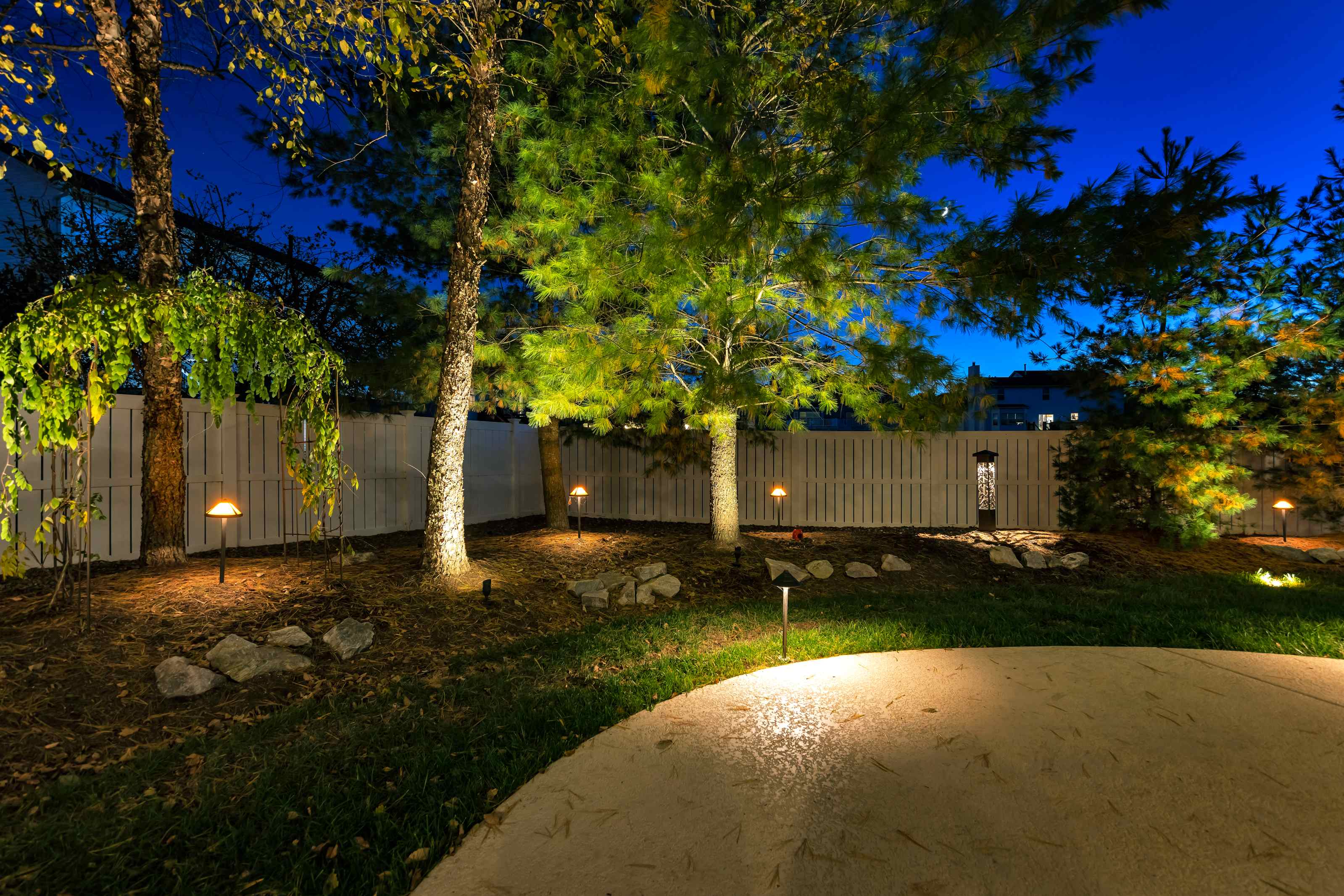
Light up Sloped Yards for Safer Cumming Nights
Sloped yards are a big part of what makes Cumming so pretty. Those rolling front lawns, long driveways, and high-backyard yards with a view can be great during the day. At night, though, hills can turn dark and tricky, especially when steps, curves, or dips disappear into the shadows.
Many lighting plans are made for flat lots, not hills. When you use the same approach on a slope, you can end up with glare in your eyes, deep pockets of darkness, or fixtures that slide out of place after a few storms. With the right landscape lighting for slopes in Cumming, GA, you can make your yard safer, more inviting, and more beautiful all year long. As a local outdoor lighting company, we understand the terrain, clay soils, and plant growth patterns that shape hilly properties in this area.
Why Sloped Yards Need a Different Lighting Strategy
Gravity is always at work on a hillside. Fixtures that sit at a slight angle during install can tilt more over time as dirt shifts or washes away. When that happens, beams move, and the light may shine straight into your eyes or off into the trees instead of on the steps or path you wanted to see.
Sloped yards also have safety concerns that flat yards do not. Common trouble spots include:
- Hidden steps or short stair runs between levels
- Erosion channels where rainwater has cut grooves in the ground
- Retaining walls that create sudden drops
- Steep driveways or curved approach roads
When these features are not clearly lit, they can be hard to judge at night, especially after a heavy rain shower when surfaces are slick. On the style side, poor lighting can make a hill look flat and dull or create harsh bright spots that pull your eye away from the home. A slope-aware design uses height changes to bring depth to trees, rock outcrops, and layered plant beds so your yard looks interesting, not washed out.
Smart Fixture Choices for Hillsides and Terraces
The right mix of fixtures makes a big difference on a hill. Each type plays a separate role, and together they help guide people safely while still looking natural.
Good options for sloped yards include:
- Path lights for angled walkways, curves, and changes in direction
- Adjustable spotlights to highlight trees, peaks in the grade, and the home façade from below
- Well lights tucked at lower spots to shine up on slopes, trunks, and walls without glare
- Hardscape lights built into steps, seat walls, and retaining walls to define edges
On a slope, stability is just as important as beam spread. Georgia clay can hold a lot of water, then dry out and crack. That movement can loosen weak stakes or thin mounting hardware. For hillside lighting, it helps to use:
- Corrosion-resistant stakes and brackets that grip tightly
- Surface mounts on rock, concrete, or wall caps where the ground shifts a lot
- Secure wiring methods that stand up to runoff and heavy downpours
Durability matters even more when fixtures sit on exposed banks or tall terraces. Solid metal fixtures, strong seals, and waterproof connectors help keep your system working through stormy weather and daily sun. Professional installation adds another layer of protection, since each fixture can be set to work with grade changes instead of fighting against them.
Designing Landscape Lighting for Slopes in Cumming, GA
Good hillside lighting is not about one bright light at the top of the yard. It is about layering light from bottom to top so your eye moves comfortably across the space. We think in three simple layers:
- Ambient lighting, the soft background glow across the yard
- Task lighting, focused on walking paths, steps, and driveways
- Accent lighting, to highlight trees, walls, and special features
On slopes, glare and shadows are two big challenges. Lights sit above or below eye level much more often, so a poorly aimed fixture can feel like a flashlight in your face. Careful aiming and shielding keep beams on the ground or on the feature you want to see, not in neighbors’ windows or in passing cars on hilly streets.
Cumming yards also change with the seasons. In spring and summer, plants fill in quickly and can block light that was clear in cooler months. Frequent thunderstorms and fast-growing shrubs can change how beams spread across the grade. When we design lighting for slopes in Cumming, we look at:
- Grade changes from curb to house to backyard
- Runoff paths where water naturally flows
- Existing trees, shrubs, and hardscape that affect light and shadow
This kind of planning helps the system keep working well even as plants grow and seasons shift.
Highlighting Steps, Retaining Walls, and Driveways
Steps are one of the most important spots to light on a hill. Short flights between yard levels or long stairs down to a lake or fire pit can be hard to see at night. Under-tread and side-mounted step lights give a gentle glow on each riser so you can clearly see where your foot should land without harsh glare.
Retaining and seat walls shape many sloped yards in Cumming. Low-profile hardscape lighting installed along the faces or caps of these walls can:
- Mark changes in elevation
- Make terraces more inviting for evening use
- Create soft, even light that shows texture without overpowering the space
Driveways on hills need special care as well. A simple row of bright lights at the bottom can still leave blind spots at the top and sides. A better setup may combine:
- Downlighting from trees or rooflines to wash light over the drive
- Discreet fixtures along edges, curves, and transitions
- Accent lighting at pillars, mailboxes, or house numbers for clear wayfinding
This layered approach helps drivers judge distance, curves, and inclines more confidently after dark.
Energy-Saving Controls for Hillside Lighting
Once your hillside lighting is in place, smart technology can keep it working in a simple and efficient way. LED fixtures are a strong choice for sloped yards. They use less energy, run cooler, and last longer than many older bulbs. That is especially helpful when some fixtures are set on high banks, behind walls, or in hard-to-reach spots where frequent bulb changes would be a hassle.
Controls add another level of comfort. Timers and astronomic clocks can turn lights on and off based on actual sunrise and sunset, even as the seasons change. App-based systems can let you:
- Adjust schedules for late evenings outside
- Turn certain zones off earlier if not needed
- Check whether your system is running from inside or away from home
Zoning and dimming help you fine-tune light levels across the hill. For example, you might keep:
- Paths and stairs at a steady safety level
- Upper-yard gathering areas brighter during visits
- Lower slopes and tree lines at a softer, more relaxed glow
With thoughtful design and smart control options, landscape lighting for slopes in Cumming, GA can turn a tricky hill into a safe, beautiful, and easy-to-use space after dark.
Get Started With Your Project Today
Bring clarity, safety, and beauty to your hillside yard with professional design from Outdoor Lighting Perspectives of Atlanta. Explore how our custom landscape lighting for slopes in Cumming, GA can highlight your favorite outdoor features while improving nighttime visibility. We will walk your property with you, discuss your goals, and create a lighting plan tailored to your terrain. Ready to take the next step? Simply contact us to schedule your complimentary design consultation.